
Executive & leadership-team coaching
What’s next
for your
leadership?
Clearer decisions. Stronger collaboration. Next-level results.
I’m Dan Burns. I listen to what you want to achieve, then partner with you through a clear coaching process to turn insight into action.
Schedule a Conversation
Your goals. A process for moving forward.
Clarify what matters
Define the outcome you want.
Explore what’s possible
Discover perspectives and choices.
Put insight into practice
Take action, reflect, and build momentum.
How we can work together
Progress starts with
what matters to you.
For individual leaders
Executive coaching
Make room to think about the leadership challenges and opportunities in front of you. Together, we explore your goals, examine your choices, and identify actions you’re ready to take.
Let’s talk about your goalsFor leadership teams
Leadership-team development
Build shared clarity around what your team wants to achieve. Create space for productive conversations, stronger alignment, and commitments that support collective progress.
Let’s talk about your teamMeet your coach
A thinking partner.
A process.
Your way forward.
I’m Dan Burns, founder and executive coach at Burns Leadership. My coaching starts with listening: what you want, what matters to you, and where you want to go.
You bring your experience and knowledge of your situation. I bring thoughtful questions, space to reflect, and a process that helps you find your own answers and act on them.
Dan Burns, MBA, PCC, CPCC
Let’s start with you
What would you like
to move forward?
Let’s talk about your goals and explore whether working together is a good fit.
Schedule a ConversationPrefer to write? Contact Dan
What our clients experience.
Clients describe stronger working relationships, practical leadership tools, and greater readiness for change. These excerpts come from their published accounts.




Executive Coaching and Leadership Team Development
Help your leaders turn shared priorities into consistent action.
When decisions keep coming back to you, accountability is uneven, or your leadership team is pulling in different directions, we help you understand what is getting in the way and strengthen the practices that drive results.
Talk through your leadership challengeWhat needs to work better?
Your situation shapes the work. These are three places we can begin.
Too much still depends on you.
Routine decisions return to your desk. Delegation is inconsistent. As responsibilities grow, you have less time for the work only you can do.
What we work towardClearer ownership, sound decisions at the right level, and leaders who can carry more responsibility.
Your leadership team needs to work together.
Good people have different priorities. Meetings revisit the same issues, and commitments lose momentum between conversations.
What we work towardShared priorities, clear decision authority, and reliable follow-through across the team.
Development needs to show up in the work.
Leaders understand the concepts, but feedback, delegation, and accountability still vary from person to person.
What we work towardPractical leadership behaviors that people can observe, apply, and strengthen over time.
How we can work together
Executive coaching
Focused support for a leader navigating greater responsibility, a challenging transition, or practices they want to strengthen. We connect reflection and feedback to real decisions and actions.
Leadership team coaching
Work with your team on shared priorities, productive conversations, decision-making, and accountability. We help the team build practices it can sustain in its day-to-day work.
Leadership development
Practical learning designed around the needs of your leaders and organization. Coaching, feedback, and application help leaders carry what they learn into their roles.
We begin by understanding what matters most.
Before recommending coaching, training, or an assessment, we listen. Together, we clarify what needs to change, what is influencing it, and how you will know the work is making a difference.
- Understand the challenge. What is happening in the work, who is affected, and what would better look like?
- Identify what needs attention. Consider leader practices, team relationships, organizational conditions, and relevant feedback.
- Agree on a focused plan. Choose the approach, priorities, and measures that fit your situation.
- Apply, review, and adjust. Use real work to strengthen practices and review progress together.
An Illustrative Example
When too many decisions come back to the senior leader
A growing organization wants managers to take more ownership. We would explore how leaders delegate, how they respond under pressure, and whether people have the authority and support to make decisions.
Strengthen the conversation.
Help leaders clarify the outcome, decision boundaries, and follow-up when they delegate an assignment.
Practice under pressure.
Help leaders maintain ownership in their teams as deadlines tighten, risks change, and work becomes more complex.
Make ownership workable.
Agree on shared decision rules, escalation expectations, and ways to coordinate work across teams.
What to measure: Decision turnaround time, unnecessary escalations, rework, and people's clarity about what they own and can decide. Together, we would select the measures that matter for this organization.
The Thinking Behind Our Approach
Leadership Realization Model™
Lasting improvement involves what individual leaders bring, what they do, how they respond as demands grow, and how the organization works together. This model helps us identify where development and support are needed. These are connected areas, not a fixed sequence of steps.
Select “View details” on any card to see what we examine.
Build the foundationsKnowledge, skill, ability, and attitude (KSAA)View details Close details
Explore what a leader knows, what they can do, their potential to learn, and how they approach responsibility. We use relevant experience, feedback, and assessments to focus development.
Strengthen daily leadership practicesCompetencyView details Close details
Translate those foundations into observable behavior: setting direction, delegating clearly, giving useful feedback, and following through. Coaching and practical learning connect development to the leader's actual role.
Lead effectively as demands growCapacityView details Close details
Examine how leadership holds up as complexity, pressure, and responsibility increase. Help leaders adapt their approach to different people and situations while sustaining effective practices.
Build the ability to deliver togetherCollective capabilityView details Close details
Strengthen shared leadership practices and the conditions that support coordinated action. The goal is an organizational ability that continues across teams and beyond any one leader.
The working environment matters throughout. Clear direction, decision authority, relationships, resources, and shared practices can support or constrain leadership. Our LeadershipOS™ framework helps us examine alignment, decisions, engagement, execution, and the ability to sustain progress.
What would better leadership make possible in your organization?
Let's begin with what matters most to you. Together, we can explore what needs to change and how to strengthen workplace performance and organizational health so leaders and their people can truly thrive.
Talk through your leadership challengeLeader Insights
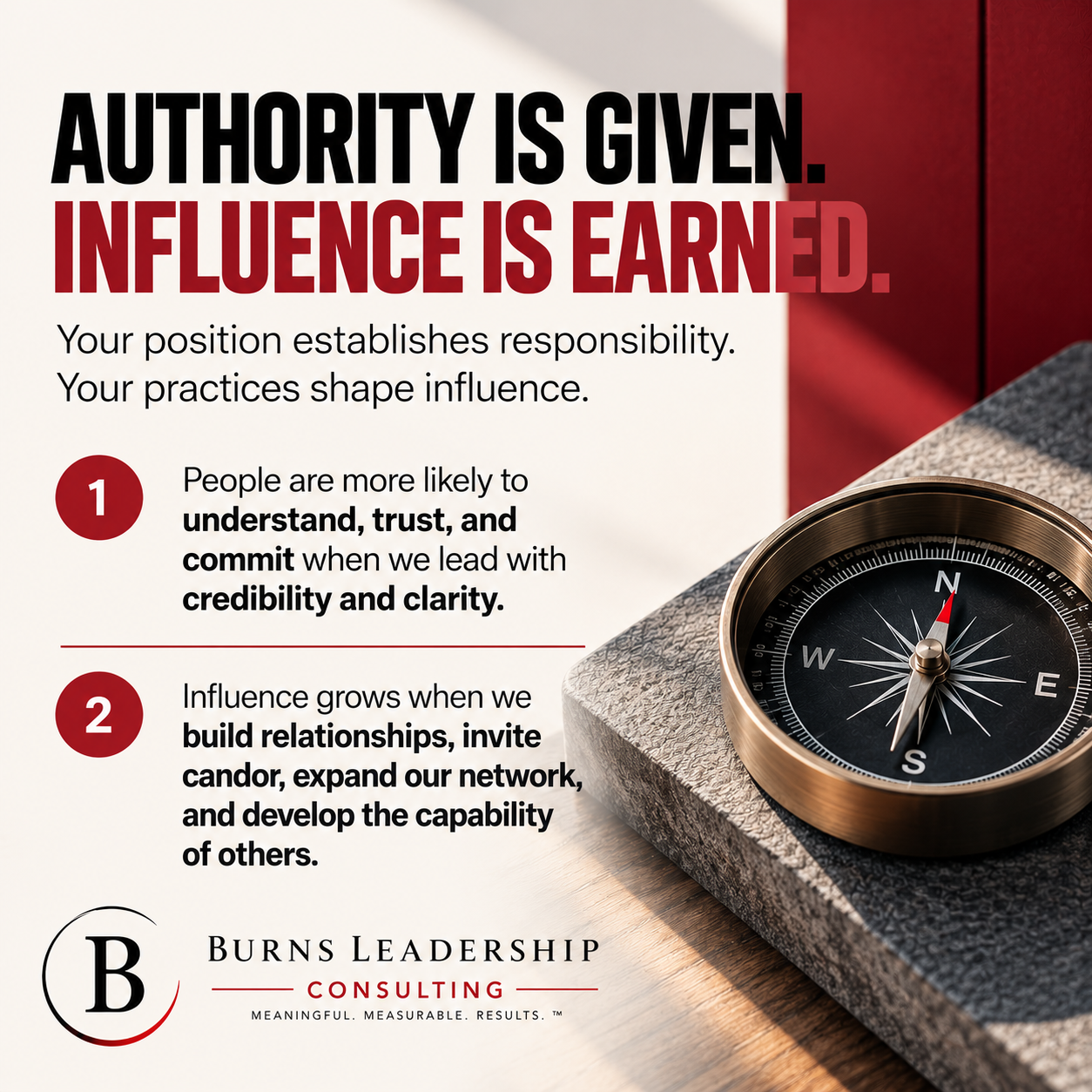
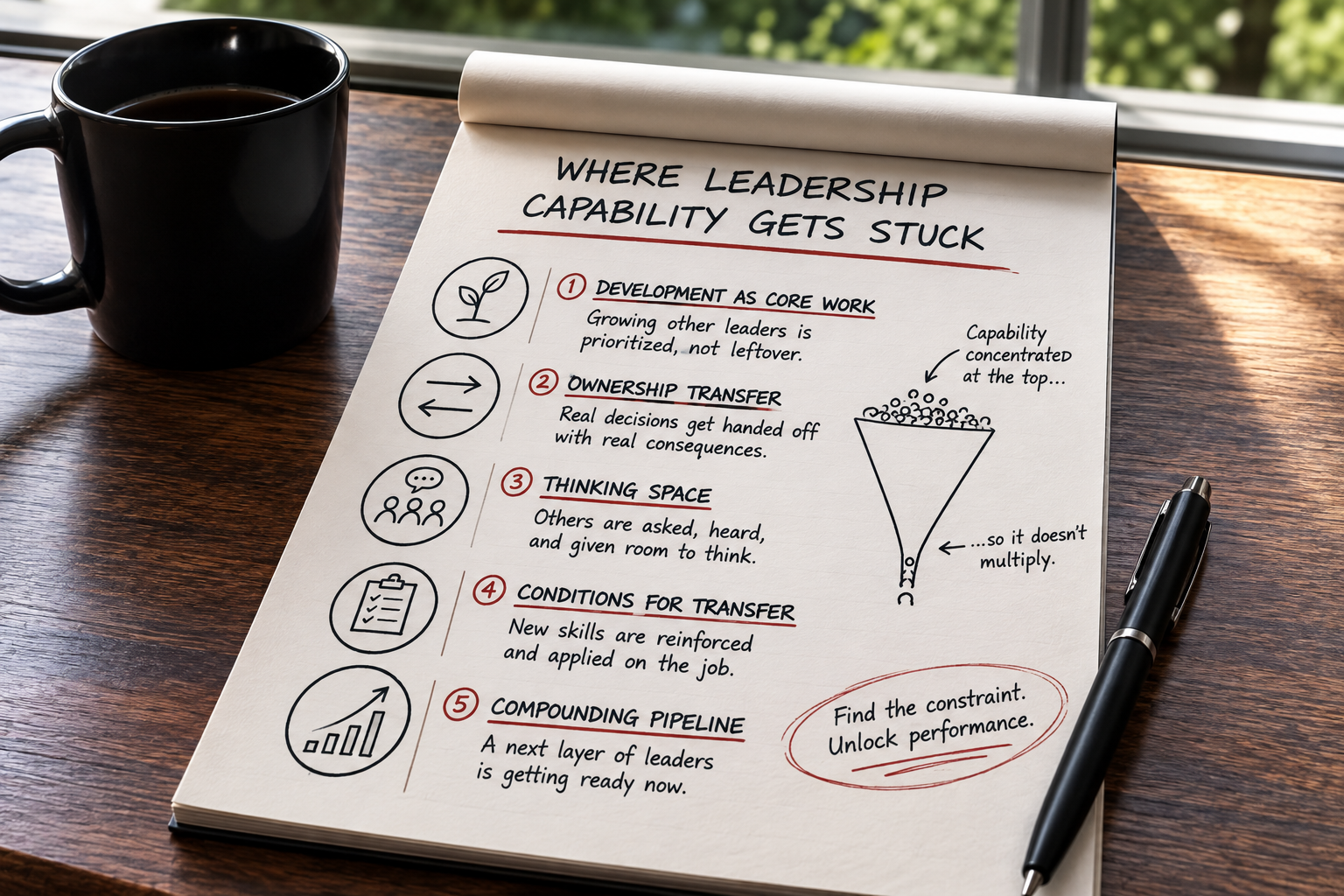
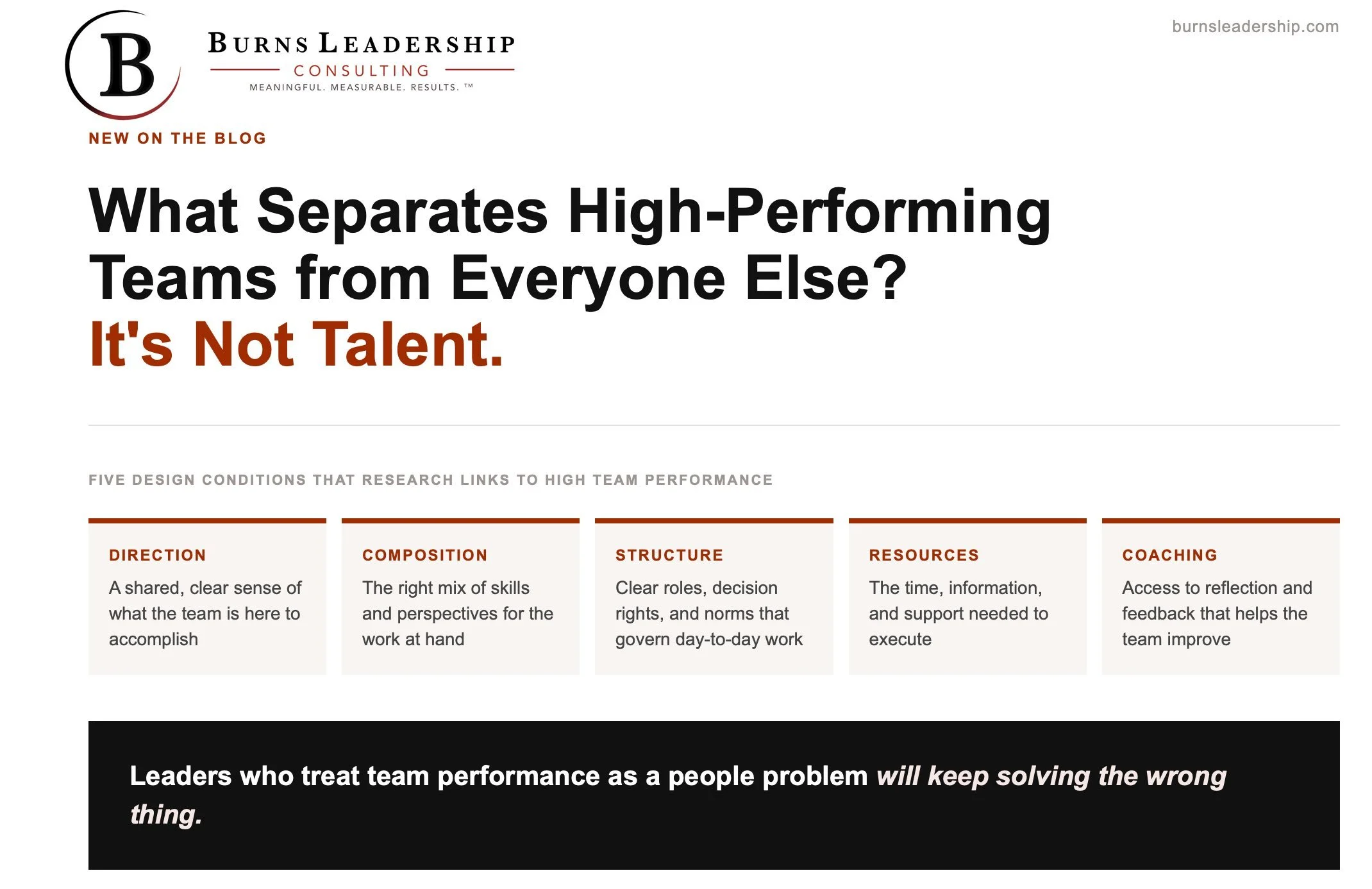
We frequently publish practical leadership information and tools to further equip leaders to amplify their influence and impact.


Considering Leader Coaching?
Send us a note.
Want more information? Let’s get in touch.
Our teams do not need us to demonstrate every effective leader practice at once. They benefit when the practices that matter most become increasingly reliable. That is how knowledge becomes behavior, behavior shapes conditions, and better conditions strengthen team performance.